
Testing
Test with us
A flexible side hustle making a meaningful difference, right from your own home!

Get paid to share your feedback and help make the internet a better place.
Ever used a website or app and thought, “Well… that was harder than it needed to be”? That’s exactly the kind of insight organisations need, and it’s why See Me Please exists. We connect the real experiences, preferences, and feedback of people who reflect the communities we live in with large organisations and government agencies, helping them improve the usability of their online services.
We’re currently onboarding new testers, and we’d love to hear from you.
Is this for you?
You don’t need to be a tech whiz. If you use online services and are happy to talk about what works, what’s confusing, or what gets in the way then you’re already halfway there.
Our tester panels reflect the real world, rather than what organisations would historically call ‘mainstream users’. Our tester cohorts include:
- People who are Deaf or Hard of Hearing
- People with low vision
- People who are blind
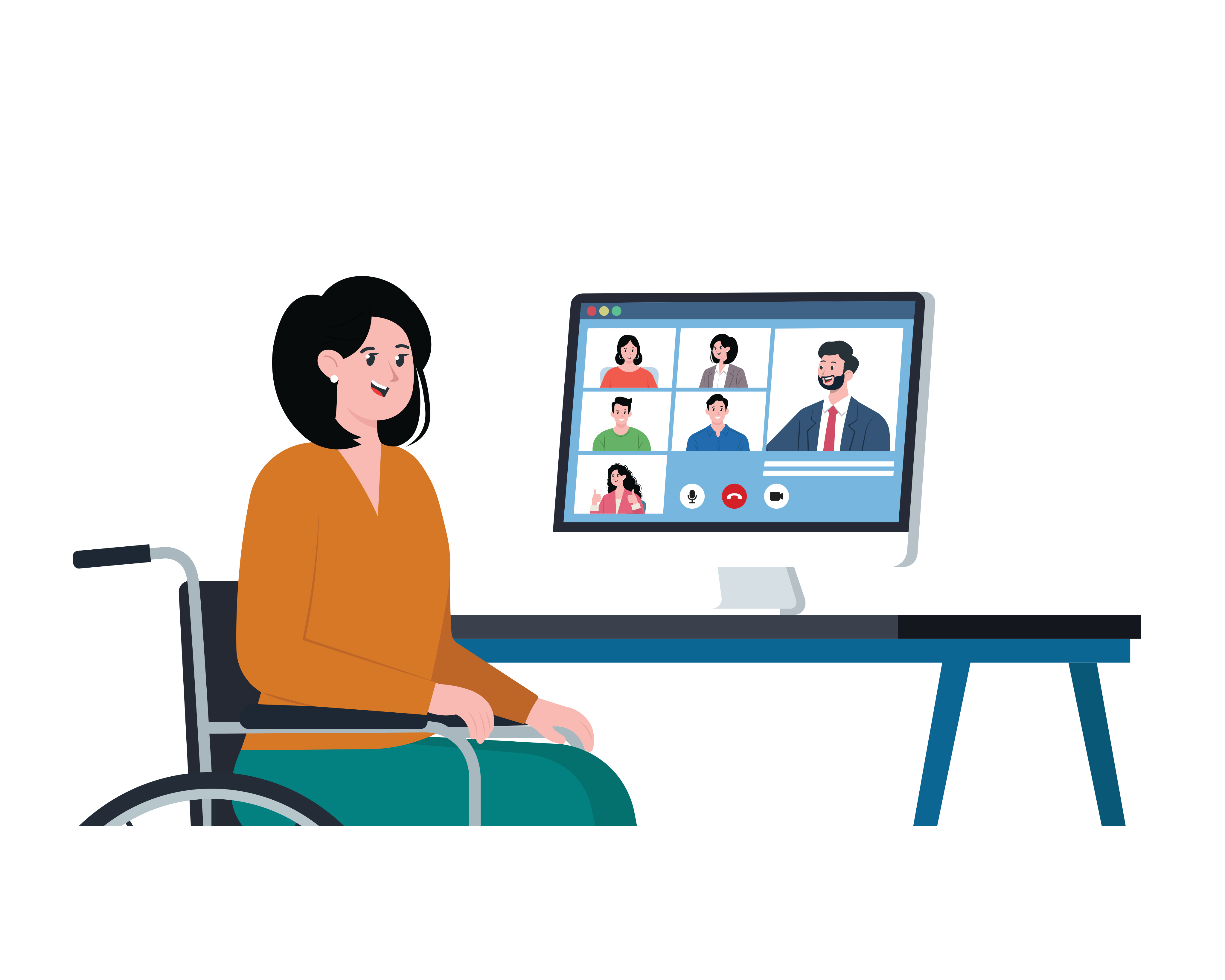
- People with physical disabilities
- Aboriginal people
- Neurodivergent people (Autistic and/or dyslexic)
- People who speak English as a second language
- People aged 70 or older





Your lived experience is the expertise.
Why your feedback matters
Digital services run our lives from banking and healthcare to travel and education. Assistive technologies have opened doors for many people, but plenty of services still don’t work as they should.
Most designers and developers genuinely want to do the right thing. The problem? Many have never considered navigating the internet from your perspective. When you share what it’s like to use a service in real life, it creates understanding, empathy, and the opportunity for organisations to improve.
What it’s like to test with us
Testing with See Me Please is flexible, often remote, and invitation-based. If you’re onboarded to our panel of participants, you’ll be offered projects and can choose whether or not to take part. There’s no pressure and no obligation.
This work isn’t for everyone. It involves reflecting on your experience and sharing feedback openly. But if you enjoy giving thoughtful feedback and like the idea of helping make digital services fairer and easier to use, it can be genuinely rewarding (and good pay!).
Last updated on 2 March 2026
Frequently asked questions
The stuff you’re probably wondering about
All the practical details like payment, privacy, and how projects work.
General
See Me Please is a research platform that connects organisations (such as governments, banks, insurers, and service providers) with diverse people to test and improve digital services. We’re essentially a user testing platform but centre our feedback from a holistic representation of society rather than ‘mainstream users’.
We focus on real-world usability, accessibility, and inclusion not theoretical compliance. Our work helps organisations understand how people actually experience digital services in their everyday lives.
We believe the most effective way to improve the accessibility of online services is to empower the teams responsible for design and development with deeper understanding. And the most powerful way for organisations to build that understanding is by developing empathy directly from the people they are designing for.
In practice, our platform provides user testing feedback by curating panels of diverse and disabled participants, ensuring organisations receive insight from people with a wide range of lived experiences. This includes people who are blind or have low vision, people who are Deaf, older people, neurodivergent people, and people who navigate digital services in different ways. By bringing these perspectives together, we help organisations see how their services perform across a broader cross-section of society, not just for the “average” user, and identify barriers that might otherwise remain invisible.
Through the collection of video and written feedback from our valued testers, we help organisations strive towards universal usability, rather than relying solely on conformance reports or consultancy advice.
We generally work with large organisations such as government departments, banks, insurers, utilities, universities, and other essential service providers. Each testing project is offered by invitation and you always have the choice to opt in or decline.
User testing is a widely adopted process. Many organisations do user testing because it’s the most reliable way to understand how real people actually experience their online products and services, not how they’re intended to work. It replaces assumptions with evidence, showing where people get confused, stuck, or disengaged in ways analytics, compliance checks, and expert reviews often miss.
User testing helps organisations reduce risk, improve usability across real journeys, prioritise investment, build trust, and reduce inefficiencies like rework and support calls. Seeing a real person struggle to complete a task creates clarity and urgency that reports and dashboards can’t.
The limitation of user testing is often who is involved. Many studies rely on narrow or “mainstream” participant groups, which means critical issues remain invisible. That’s where we come in. By curating panels of diverse and disabled people with lived experience, we surface the real-world friction that shapes better outcomes… not just for ‘mainstream’ users, but for everyone.
No, because we need certain details to set up accounts, ensure eligibility, and pay testers. However, we aim to minimise what is shared with clients and use anonymised/aggregated insights where possible. Above all, we’re transparent regarding how we use your data and empower you with choice and control.
Please read the privacy policy on our website if you have specific questions regarding your data. And feel free to email any specific questions to us at team@seemeplease.com
No. User testers are engaged as independent contractors, not employees or agents, and there’s no entitlement to employee benefits (like superannuation, annual leave, or sick leave).
No. There is no guaranteed work or minimum engagement threshold. Project participation depends on (1) See Me Please inviting you, and (2) you choosing to accept.
Eligibility
In order to apply, you need to be over 18 and live in Australia, the UK or Ireland. We’ll be onboarding US based participants soon. You will need to have access to the internet and access to a device.
Importantly, you are eligible to do user testing with See Me Please if you fit into one of the categories below:
You are blind and use screen readers
You have low vision and rely on magnification, adjusting contrast settings and/or use dark mode.
You are Deaf - and rely on sign language as your first language.
You are neurodivergent i.e. Autistic
You are older than 70
You speak English as a second language’ or
You have another disability and rely on assistive technologies such as keyboard commands only, head mouse etc
You do not need formal qualifications or technical knowledge.
Maybe…..You need to align with one of the categories mentioned above to be eligible for user testing with See Me Please.
Unfortunately we’ve had people pretend to have a disability in order to access our well paid user testing opportunities, which completely diminishes the value of our service so you may also be asked for evidence of your disability in order to be considered.
If you don’t identify as having a disability, you’re not neurodivergent, older than 70 or don’t speak a language fluently other than English, you’re not eligible to participate at this time.
Yes. Many of our testers are first-time participants. We’re looking for normal people not tech heads! We provide clear instructions, supportive guidance and feedback and plenty of time to complete tasks.
There are no right or wrong answers, this is all about sharing your preferences and feedback on your experience.
Usually no. Some projects my require you to use a certain type of assistive technology, and we collect information on the types of devices and assistive tech you use so you’d be invited on that basis. But generally you can use whatever device or set up you would use in a real world scenario. You just need to ensure you can record your screen and audio. We can help you set this up ahead of time if you need assistance.
How does Testing Work?
Most projects involve recording your screen and narrating your experience as you complete a series of everyday tasks. For example, a project might involve booking a flight, where we would cover the cost of the flight as part of the test. Tasks could include searching for flights on different dates, reviewing search results, selecting a seat, completing the booking form, and checking the booking confirmation and follow-up email.
Projects generally also include a written questionnaire at the end. It’s important that participants are comfortable recording their screen, clearly narrating their experience, and explaining where things feel confusing or don’t work and why. We also rely on testers to provide thoughtful, detailed responses in the written questionnaire, as this feedback is a critical part of the insight we deliver to organisations.
Some projects are unmoderated - where you record the tasks in your own time, and others are moderated similar to an online interview style. It’s rare to have a project that requires you to present in person.
Every project is different and we always allow far more time that what’s required. You can also complete some tasks and come back to others later. Generally speaking, projects would take about an hour or two of your time. Being conscious of the gig economy, we always pay participants a minimum of 3 hours pay, even if it takes you less time, we just expect thorough, considered feedback.
Yes, in most projects you’ll be asked to record your screen and audio as you complete tasks and share your experience. The premise of our work is helping organisations see that there are real people on the other side of their digital services, and we compensate participants well for sharing their personal preferences and feedback in this way.
We generally prefer participants to record using their camera as well, as this helps humanise the experience, but this is always your choice. We’re clear about what’s involved before each project, so you can make an informed decision about whether you’d like to take part. If recording your screen or voice isn’t for you, that’s completely okay…this type of work may simply not be the right fit.
You can always decline a project
Payment
Absolutely. You’ll never be asked to work without pay and we’ll never pay you in vouchers. We pride ourselves on paying testers for their time, expertise, and lived experience. Payment varies by project depending on what’s involved, but details are always shared before you decide whether to opt in.
As a principle, we set a minimum rate of pay at double the standard minimum wage and pay a minimum of three hours for each project, even if it takes less time. That's a minimum rate of $55 per hour for Australian Testers.
If you’d prefer a higher rate, you can do this during onboarding or let us know later. Just keep in mind that higher rates may need to be justified by a specialised skill set, such as fluent use of refreshable braille or other niche expertise. You’ll be engaged as an independent contractor, and payment is inclusive of all taxes and costs. You’re responsible for managing your own tax obligations. Our terms and conditions (available on our website) explain how payment works in more detail.
You’ll be paid via electronic funds transfer to your nominated bank account. We generally process payments within 14 days of you completing the project.
Delays are rare, but if something goes wrong or your payment doesn’t seem right, please get in touch with us team@seemeplease.com
No. Testers are independent contractors not employees. Participation does not create employment. There’s no guaranteed work and payment is fully inclusive of tax etc.
Depending on your circumstances you may need to declare payments as income. We recommend seeking independent tax advice if unsure.
Yes, in limited circumstances. If quality standards aren’t met, we may (at our discretion) withhold payment, pay partially, reduce your star rating, or request a resubmission. If you opt in and don’t complete the project by the deadline, you may forfeit payment (in part or full) and be deprioritised for future work
Privacy & Data
We’re upfront about how we collect, store, and use your data, and everything is set out clearly in our Privacy Policy on the website. We collect information at two points: when you apply to become a participant, and again if you choose to opt in to a specific project. During onboarding, this may include your contact details, date of birth, information about how you use technology, and your bank details so we can pay you. This helps us understand your suitability for future projects. If you opt in to a project, we’ll also collect the feedback and recordings you choose to share as part of that work.
Your information is used to match you with relevant projects and may be used to understand patterns across groups in an aggregated way, as well as helping organisations improve their digital services. Unless discussed and agreed prior (which is very rare) - it’s not used for advertising.
Every project is invitation-based, and you’re always free to opt in or decline. There’s no obligation to participate and you’ll never be penalised for saying no. We’re an early-stage startup, so projects can come and go, but opting out won’t affect future opportunities. Best to think of this as a side-hustle rather than consistent ongoing work.
You can withdraw from a session at any time, ask questions before consenting, or contact us about your data. Withdrawing won’t impact your ability to be invited to future projects.
No. Participation is always optional.
No. Our platform and services are not intended for children, we do not knowingly collect data relating to children, and we do not appoint children as testers.
During onboarding, this may include your contact details, date of birth, information about how you use technology, gender, occupation status, assistive technology preferences (e.g., screen readers, voice control) and your bank details so we can pay you. In some cases we may also ask for identification or verification document so we know you are who you say you are.
This information helps us understand your suitability for future projects. If you opt in to a project, we’ll also collect the feedback and recordings you choose to share as part of that work.
We may not be able to create your account or offer opportunities if required information isn’t provided.
Sometimes, depending on the project, we may ask for information that is considered “special category” or “sensitive personal information” under applicable privacy laws (for example, health-related information that helps us understand accessibility needs).
If a project requires this we will tell you in advance, explain why it’s needed and how your data will be treated.
You can always decline that project
No, because we need certain details to set up accounts, ensure eligibility, and pay testers. However, we aim to minimise what is shared with clients and use anonymised/aggregated insights where possible. Above all, we’re transparent regarding how we use your data and empower you with choice and control.
Please read the privacy policy on our website if you have specific questions regarding your data. And feel free to email any specific questions to us at team@seemeplease.com
We use a two-step opt-in process:
Onboarding (eligibility + account set-up): if you’re deemed suitable, you’re invited to complete onboarding.
Project-by-project opt-in: after onboarding, you may be invited (at our discretion) to participate in specific projects. Each invitation will typically include the project requirements, an estimate of the maximum time, the total compensation and the client organisation name. You can accept or decline any invitation without consequences
Yes. Client information, prototypes, concepts, and client identities are treated as confidential, and you agree not to discuss your project experiences with anyone or disclose client identities.
Technical & Practical Questions
If something goes wrong follow the instructions provided or feel free to contact us team@seemeplease.com. We know life can get busy and issues arise…we just appreciate a short email if you’re unable to complete a project on time or if you’re experiencing technical issues so we can manage the deliverables with our customer (and provide you with some help if need be).
Yes...we encourage it. Please record how you normally navigate online services using your assistive technology, including capturing your screen reader or other tools in the recording audio. You may need to briefly explain what your assistive technology is doing, as many of our customers won’t be familiar with how it works unless you talk them through what you’re experiencing.
Quality Feedback
Good feedback is authentic and grounded in your lived experience. It’s narrated as you go, explaining what you’re experiencing in real time, and it focuses on friction…where you take the time to explain the moments where things feel confusing, slow, inaccessible, or hard to use. We also value feedback that feels human, sharing how the experience makes you feel, not just what happens. We’re not looking for technical audits or expert advice… real experiences matter more than perfection.
No. You’re not an accessibility consultant, auditor, or compliance expert. We simply ask you to share your experience, explain what feels difficult or confusing, and describe how you personally navigate digital services. Please avoid suggesting solutions or technical fixes, such as saying something is “easy to fix”. The goal is to surface user friction, not to solve the problem.
We also ask you provide feedback based on your own experience, rather than providing feedback on what others may or may not experience. Most projects will include a range of testers from different walks of life. We do this to ensure we have a holistic representation of participants and avoid making assumptions.
No. Please use your technology at your normal speed and settings. This helps organisations understand real-world usage, break misconceptions and see how quickly barriers arise
There’s no need to adjust your behaviour for the viewer, just remember they may be unfamiliar with your assistive tech, so explaining issues as you experience them is very helpful.
Absolutely and we encourage it. If something works well or feels intuitive, it’s helpful to mention it briefly. Balanced feedback builds credibility and helps organisations understand what to keep as well as what to improve.
We value your honesty and understand that some digital experiences can be genuinely frustrating. Please feel free to share what isn’t working, but aim to do so calmly and constructively. For many designers and developers, this may be the first time they’ve truly seen or understood an experience from your perspective, and that awareness alone is a powerful step forward.
We encourage you to be open about the challenges you encounter, but try to avoid ranting, shaming language, or harsh criticism. Many teams are working within real constraints, and our goal is to build understanding and interest in accessibility.
No. Please don’t speak for other cohorts, disabilities, or user groups. Your feedback should reflect your experience, preferences and navigation style.
If a submission is incomplete, doesn’t follow the project instructions, or lacks clear narration or usable insight, we may ask for a resubmission, partially reduce payment, or adjust your rating for future invitations. These expectations are outlined in the Tester Terms and help ensure fairness and quality across projects for everyone involved.
Yes. We use a star rating system to assess participation and quality (e.g., completion, timeliness, depth of feedback, and narration quality). Higher ratings may lead to priority consideration for future invitations.
Ready to get started?
If this sounds like your thing, apply now. We’ll guide you through onboarding and explain exactly what to expect.