
If you're working on accessibility in Australia or New Zealand, you've almost certainly come across Intopia. If you're looking for real people to test your services, you may also have come across See Me Please. Both are Australian-born, both care deeply about people with disability, and both exist because a digital service can look fine on paper and still shut people out.
But we do different jobs. Intopia is a full-service accessibility consultancy. See Me Please is a research platform that does one thing: show your teams how real people experience your service, end to end. This article lays out the difference plainly, so you can choose what fits the work in front of you, or use both.
Who we are: See Me Please is a technology company with its head office in Sydney. Each project uses 18 paid participants, drawn from our panel of more than 300 participants in Australia, the UK, Ireland and the US. We work with more than 40 customers, and six patent applications covering our platform are lodged or in review.
What do See Me Please and Intopia have in common?
Both See Me Please and Intopia are Australian-born, both involve people with disability in evaluating digital services, and both recognise that automated tools cannot tell you whether a service is usable. Intopia does this as one part of a broad consultancy. See Me Please does it as its whole business, through a research platform.
Both organisations believe lived experience matters. Intopia runs research and co-design with people with disability through its panel, Intopia Connect, alongside its audits and advice. See Me Please runs every project with real people who rely on their own devices, assistive technology and settings every day.
Both also accept that automated tools can't tell you whether a service is usable. The difference is in what each organisation is built around, and what you're left holding when the engagement ends.
What is the difference between See Me Please and Intopia?
Intopia is an Australian accessibility consultancy offering audits, conformance reports (VPATs), strategy, training, managed services and research. See Me Please is a technology company that does one thing: lived-experience user testing, where 18 paid participants from six perspectives complete your end-to-end journey and every team gets video-led findings, usually within five business days.
Intopia offers six service lines: accessibility assessments and audits, conformance reports (VPATs), strategy and policy, education and training, a managed accessibility service, and equitable research and design. It describes itself as having the largest team of digital accessibility and equitable design experts in the southern hemisphere. If you need expert advice across your whole accessibility programme from one supplier, that breadth is real.
See Me Please does one thing. This is all we do, and that's why we're good at it. Every part of the business, from the panel to the platform, is built around one method that runs the same way every time:
Tell us the journey. A link and a sentence, or a 20-minute call. We write the research plan and tasks; your team red-pens them.
We curate your panel. 18 paid participants, three from each of six perspectives, drawn from our panel of more than 300 and hired in your country, across different assistive technologies, devices and settings.
They complete your journey, start to finish, on their own setup, thinking aloud. If someone's feedback falls short, we add another participant at our cost.
We make meaning of it. Researchers review everything, with AI helping find what matters. Every moment is tagged by journey step, perspective, severity and friction type.
Your research repository, fast. We aim to deliver within five business days of brief sign-off. Everyone in your organisation can log in.
Because it's a product, not a bespoke engagement, we can publish things a consultancy usually can't: the method, the panel make-up, the turnaround and the participant pay floor.
Who tests your service with See Me Please, and with Intopia?
See Me Please uses 18 paid participants per project, three from each of six perspectives, drawn from a panel of more than 300 participants across four countries. Intopia's research draws on Intopia Connect, a panel of people with disability in Australia and New Zealand; Intopia does not publish its size or how many people take part in a study.
Intopia describes Intopia Connect as a panel of people with disability and diverse perspectives across Australia and New Zealand, using more than 20 assistive technologies. It also doesn't publish how participants are paid or how quickly findings are delivered.
Every See Me Please project draws on six perspectives, three people from each:
Blind
Low vision
Deaf
Neurodivergent
Older than 65
Limited English, usually including someone from a refugee background
Each project draws on our panel of more than 300 participants in Australia, the UK, Ireland and the US, and our partnerships with disability employment services let us add capacity quickly when a programme needs it.
Why three from each? One person's experience might be about their own setup, habits or digital confidence. Three show whether a problem persists. Your engineering time is limited and expensive, and it should go on friction that is real.
Why these six? Older people and people with limited English often don't use assistive technology at all, but they hit some of the biggest barriers in banking, insurance and government services. When groups with almost nothing in common struggle at the same point, it isn't six accessibility issues. It's one universal usability issue, and fixing it helps everyone.
Does WCAG conformance make a service accessible?
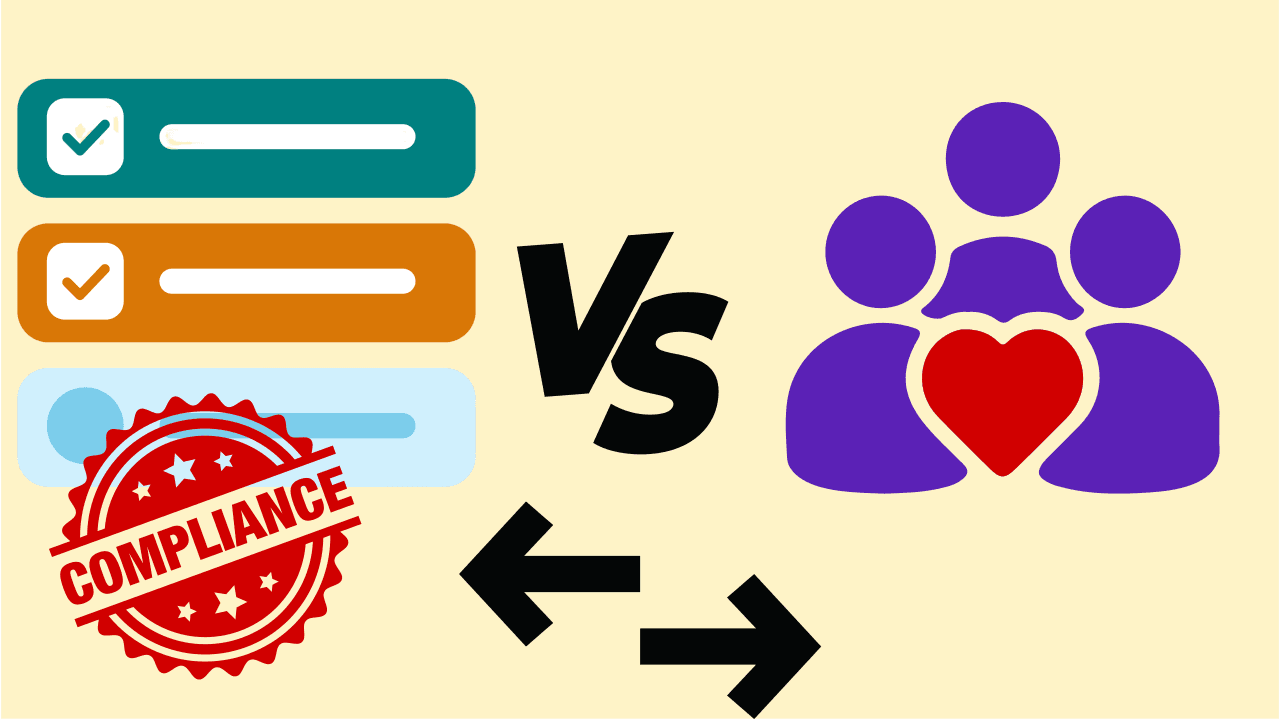
Not on its own. WCAG says its guidelines cannot address the needs of people with all types, degrees and combinations of disability, and the W3C recommends involving people with disability in evaluation. A conformance report shows where a service stands against the standard; testing with real people shows whether they can actually use it.
Conformance matters. Organisations have legal obligations, and a conformance report is the right tool when you need to state where you stand against WCAG. But conformance is a means, not the outcome. The outcome is a service people can actually use.
The WCAG 2.2 introduction (opens in a new tab) and the W3C's guidance on involving users in evaluation (opens in a new tab) both make this point.
Our own research shows why. Across more than 6,800 recordings and 9,000 tracked findings (as at November 2026; see our research (opens in a new tab)), researched with the University of Sydney's School of Computer Science, the most common failure is comprehension, not access. People could reach the content; they couldn't understand it. Some of the most costly problems only show up when real people use the whole journey: in one bank's account-opening form, every perspective we tested lost their progress each time they made an error.
There's also a practical difference in what happens next. Audit and conformance reports are written in the language of the standard, so organisations often need a specialist to interpret them, year after year. Watching a real customer struggle needs no translation. When a designer sees a person who is blind trying to complete their form, they understand the problem, and usually the fix, in seconds. Over time, teams build their own understanding and need less outside help.
What do you get from See Me Please, and who uses it?
Every See Me Please project produces a research repository that anyone in the customer's organisation can open, with no seats or licences. Executives get a five-minute highlights reel, product managers get prioritised findings and scores, and designers and engineers get recommendations beside video clips and chaptered recordings.
An audit or conformance report is usually written for one owner: the accessibility lead or compliance team, who then has to translate it for everyone else. Our research repository is built for every team that touches the journey:
Executives and steering committees: a five-minute highlights reel and headline findings, edited by researchers to win attention and budget.
Product managers: the summary view, usability and accessibility scores by perspective, and findings filterable by journey step, severity and friction type, showing what to fix first.
Designers: recommendations, each beside a short clip of the moment: not just what's wrong but what to do about it, with no jargon to decode.
Engineers: the detailed view, chaptered recordings and WCAG mapping: exactly what happened, on which assistive technology, and which success criterion it relates to.
Content and service designers: comprehension and service-design findings from older people and people with limited English, evidence for changes that rarely show up in an audit.
Accessibility and compliance leads: WCAG mapping and the participant dashboard for policy and reporting, plus clips that win over busy colleagues.
Researchers: every session, unedited and chaptered by task, in a repository that grows with every project.
Constrained teams: quick wins kept separate from the big fixes, such as relabelling a button or rewriting a sentence, that can ship this sprint.
Because one project reaches every team it touches, it does more than fix a journey. It builds understanding of diverse customers across the organisation.
How does See Me Please prioritise and score findings?
See Me Please weighs every finding on severity, persistence across perspectives, where it happens in the journey, and whether one group is worse off. Each project gets separate accessibility and usability scores in four bands, a blocker caps the score, and findings map to WCAG success criteria where needed.
Severity runs from a person being locked out to a minor niggle. Persistence asks whether a problem affects one perspective or everyone, which tells your team whether it is real and how widely a fix will help.
Every project gets two separate scores, because they answer different questions. The accessibility score asks whether people can reach what they need to make an informed decision. The usability score asks whether the experience is seamless, intuitive and respectful of their time. Each lands in one of four bands (Awesome, Nice, Hmm, Ouch), at task and project level. A blocker caps the score, so a single person locked out isn't averaged away. Behind the scores sit seven friction types and six severity levels, applied the same way on every project so you can benchmark over time.
Where you need it, every finding maps to WCAG. We show where something doesn't conform to a success criterion and explain that criterion in plain language. We aren't auditors, and we don't certify conformance; if you need a formal conformance claim, keep your auditor.
How fast does See Me Please deliver findings?
See Me Please aims to deliver within five business days of brief sign-off: typically three days of testing and two of synthesis. That is possible because participants are already recruited and onboarded, so findings arrive inside the sprint that needs them rather than after the feature has shipped.
Speed matters because findings that arrive after a feature has shipped become rework. Fast, repeatable rounds let teams test a redesign before launch and then test the fix.
Is See Me Please a product or a consultancy?
See Me Please is a product. We build and run our own research platform, so the method and deliverables are the same on every project, and every customer benefits from new features as they ship. Six patent applications covering parts of the platform are lodged or in review.
Because we build and run our own platform, every customer benefits from what we build next. In development now:
Integrations with Jira, Figma and Linear that send a finding and its clip straight into the backlog or the design file
Natural-language search across every project in your repository
AI-assisted synthesis and friction detection, always reviewed by researchers
Insights aggregated across your organisation, and benchmarking against your peers
Seymour, our crawler, which measures inclusive language, footnotes and alt text across whole sectors, so content findings sit beside what real people experienced
We publish what we learn from our research dataset on our research page (opens in a new tab).
How are See Me Please participants paid?
See Me Please pays every participant at least double the open employment minimum wage where they live, with at least three hours' pay per project whatever the session length, and prioritises people who have been out of work for a long time. Intopia does not publish its participant pay rates.
Ask any provider how the people testing your service are paid. The quality of insight depends on whether participants feel respected and unhurried.
Key terms
WCAG: the Web Content Accessibility Guidelines published by the W3C. Version 2.2 is current, and most Australian, UK and EU rules point to level AA.
Conformance report (VPAT): a document stating how far a product meets each WCAG success criterion. It is usually prepared by an accessibility auditor.
Lived-experience user testing: research in which people who rely on assistive technology, adaptations or particular ways of reading and understanding complete real tasks on a service, on their own setup.
Universal usability: designing so that a service works for the widest range of people. When different perspectives struggle at the same point, the fix usually helps everyone.
A genuine note about Intopia
Intopia does great work, and it's wonderful to see an Australian-born business flourish in this field. It is a disability-led and female-led social enterprise and a certified B Corp. It has done a great deal for the Australian accessibility community, through A11y Camp, its training and its published research, including its Assistive Technology Survey. Its expertise lies in deep consulting, and if you need audits, conformance reports, training or an accessibility strategy, you're in good hands.
See Me Please sits in a complementary place. Many organisations will need both: an audit to know where they stand against the standard, and real people to know whether the service works.
When should you choose Intopia, and when See Me Please?
Choose Intopia when you need a formal audit, a VPAT, an accessibility strategy or structured training. Choose See Me Please when you need to know whether real people can complete your journey, with findings every team can act on within five business days. Many organisations use both.
Choose Intopia when… you need a formal audit or conformance report (VPAT). Choose See Me Please when… you need to know whether real people can complete your journey, end to end.
Choose Intopia when… you need an accessibility strategy, policy or maturity assessment. Choose See Me Please when… you need evidence that changes what your teams build this sprint.
Choose Intopia when… you need structured training courses for your staff. Choose See Me Please when… you want your whole organisation to see diverse customers using your service.
Choose Intopia when… you need ongoing accessibility advice or extra capacity in your team. Choose See Me Please when… you want fast, repeatable research with a published method and turnaround.
Choose Intopia when… you need expert review against the standard. Choose See Me Please when… you want findings across six perspectives, including older people and people with limited English.
Frequently asked questions
How many people should test from each perspective?
Three. One person's experience may reflect their own setup or habits; three show whether a problem persists. See Me Please uses three people from each of six perspectives, 18 paid participants per project. Ask any provider how many people from each group will take part.
Should accessibility testing include people who don't use assistive technology?
Yes. Older people and people with limited English often don't use assistive technology but hit some of the biggest barriers in banking, insurance and government services. See Me Please includes both perspectives in every project, alongside blind, low vision, Deaf and neurodivergent participants.
How long does lived-experience user testing take?
See Me Please aims to deliver within five business days of brief sign-off. Timeframes vary widely between providers and many don't publish them, so ask for a committed date before you sign.
Who in an organisation can use the results?
With See Me Please, anyone with the organisation's email address can open the research repository, with no seats or licences. Ask any provider whether results come as a report for one owner or as something every team can use.
Will our teams need a specialist to interpret the findings?
See Me Please findings come with plain-language recommendations and a video clip of each moment, so designers and engineers can act without a translator. Where WCAG matters, each finding is mapped to its success criterion and the criterion is explained.
How should research participants with disability be paid?
See Me Please pays at least double the open employment minimum wage, with at least three hours' pay per project. Ask any provider for its floor rate and minimum hours: fair pay affects who takes part and the quality of what you learn.
Is See Me Please an accessibility consultancy?
No. See Me Please is a technology company with its head office in Sydney. It runs lived-experience user testing through its own platform, with a panel of more than 300 participants in Australia, the UK, Ireland and the US, and does not sell audits or conformance reports.
Can user testing replace an accessibility consultant?
For understanding whether people can use a service, often yes: teams that watch real people struggle need less help interpreting findings. For a formal conformance claim, such as a VPAT or a procurement requirement, you still need an auditor. Many organisations use See Me Please alongside an audit.
What are the alternatives to a WCAG-only accessibility audit?
The main alternative is lived-experience user testing, where people with disability and other excluded groups complete real tasks on your service. See Me Please runs this with 18 paid participants across six perspectives and maps each finding to WCAG, so you see both the barrier and the criterion.
Summary: See Me Please vs Intopia
Intopia and See Me Please are both Australian-born and both work to make digital services usable for people with disability. Intopia is an accessibility consultancy whose strength is audits, conformance reports, strategy and training. See Me Please is a technology company whose product is lived-experience user testing: 18 paid participants from six perspectives per project, video-led findings for every team, and delivery within five business days. Organisations comparing See Me Please and Intopia often need both: Intopia to state conformance, and See Me Please to show whether real people can use the service.
The worst outcome isn't choosing the wrong provider. It's shipping a service that conforms on paper and still shuts people out.