
Last reviewed 24 November 2026 (AEST). Facts about Deque come from its own public website, read on 24 November 2026 and linked at each claim.
Short answer
Deque makes axe, the open-source accessibility testing engine, and sells audits, conformance reports and Deque University training. Its own 2021 study found automated testing covered 57% of issues on average. See Me Please covers the part that needs people: 18 paid testers from six perspectives complete your real journey, and you see on video what stopped them.
Test one journey with 18 real people. Book a 30-minute call and we will scope it with you. Not the budget holder? Ask us for a one-page summary to send your manager. Book a call
Key terms
Perspective: one of the six groups in every project: Blind, Low vision, Deaf, Neurodivergent, Older than 65 and Limited English.
Finding: one barrier or moment of friction a tester met, tagged by journey step, perspective, severity and friction type.
Accessibility score and usability score: two separate scores out of 100. The first asks whether people could reach what they needed; the second asks whether the experience respected their time.
WCAG conformance: meeting every WCAG success criterion at a level, on every page. Only an audit can establish it.
Finding totals: our research quotes different totals from the same 15 studies, such as 5,733 or 7,027 findings, because each analysis counts a different set: individual findings, synthesised findings that group similar moments, or only the findings that carry the relevant tag. See how we publish research.
What is the difference between See Me Please and Deque?
Deque is a US accessibility company best known for axe, its open-source testing engine, and for axe developer tools, expert audits, conformance reports, remediation help and Deque University training. See Me Please is a technology company that runs lived-experience user testing: 18 paid participants, three from each of six perspectives, complete your real journey on their own devices and assistive technology.
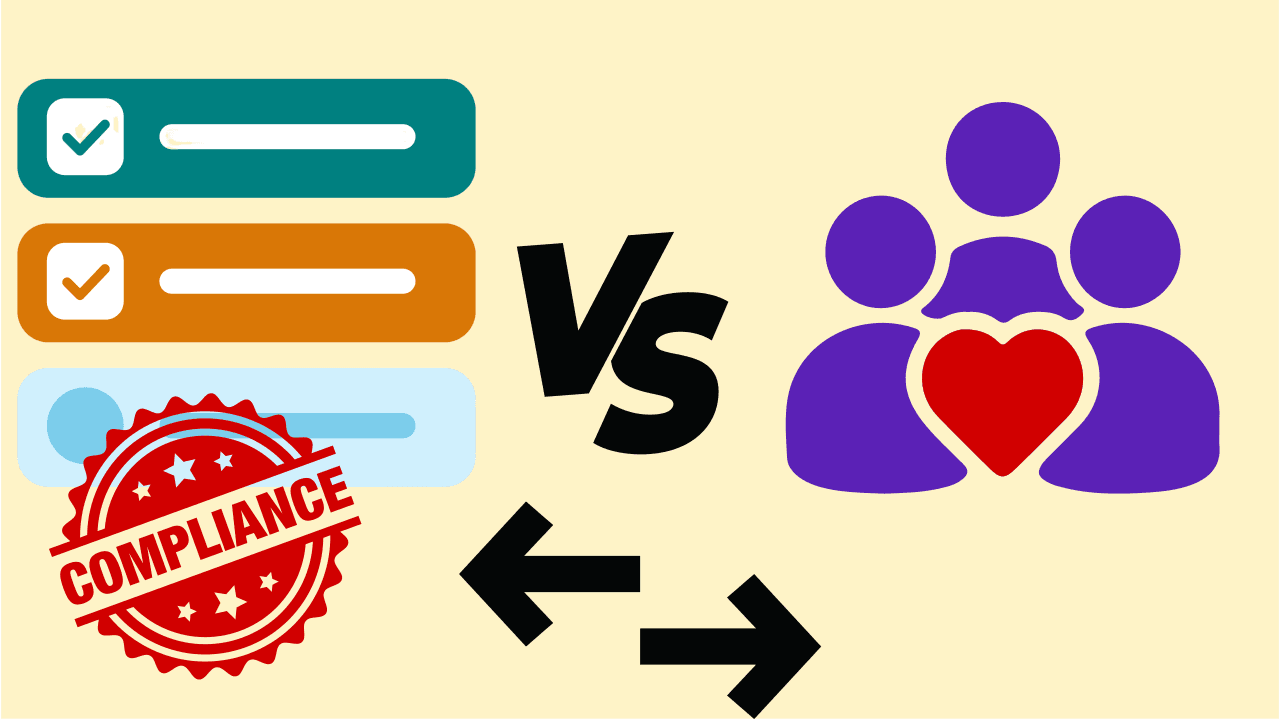
Deque’s tools and audits tell you where your code falls short of the standard and how to fix it. See Me Please tells you whether people can actually complete what matters, and why they cannot when they don’t.
What does Deque offer?
According to deque.com (read 24 November 2026), Deque offers:
Axe tools. The free, open-source axe-core library, which Deque says “has been downloaded 5 Billion+ times”, plus axe DevTools for automated testing of web and mobile, axe Monitor for site-wide scanning and reporting, axe Auditor for systematic manual testing, a linter, a browser extension and an AI assistant.
Audits and conformance reports. Deque says its experts “have completed 10,000+ accessibility audits”, and it offers accessibility conformance reports (VPATs).
Remediation and consulting. Hands-on help for designers and developers, document remediation, source code remediation and strategy.
Training. Deque University. Deque says more than 200,000 people have trained on its courses and sessions.
Deque was founded in 1999 by Preety Kumar and is headquartered in Herndon, Virginia, with offices in the Netherlands and India (About Deque). Deque says it was named a Leader in the 2026 Gartner Magic Quadrant for Digital Accessibility (deque.com). Making axe-core free and open source changed what teams everywhere could catch before release.
Deque is also clear about what automation can and cannot do. Its own 2021 study of more than 2,000 audits and nearly 300,000 issues found that, on average, 57% of accessibility issues were covered by automated testing. The rest need a person. And in its guide to including users with disabilities in UX testing, Deque says usability testing with disabled people “doesn’t determine if a technology conforms to accessibility standards” and that “both types of evaluations should be performed before a new product is launched.” We agree with both points.
What does See Me Please offer?
See Me Please does one thing: lived-experience user testing, run through our own platform. You tell us the journey; we write the research plan and tasks, and your team reviews them. 18 paid testers, three from each of six perspectives, complete it on their own devices and assistive technology, in a hybrid of moderated and unmoderated sessions chosen per tester and task for the best outcome, recruited in your country from our panel of more than 300 testers in Australia, New Zealand, the UK and Ireland. Researchers tag every finding by journey step, perspective, severity and friction type, map it to WCAG 2.2 where it relates to a success criterion, and publish it to a research repository everyone in your organisation can open. Read how a test works.
See Me Please and Deque side by side
Question | Deque | See Me Please |
|---|---|---|
What it is | Accessibility tools, audits, remediation and training company | Technology company running lived-experience user testing |
Main question answered | Where does our code break the standard, and how do we fix it? | Can real people complete this journey, and what gets in their way? |
Who evaluates | Automated rules (axe) and accessibility experts | 18 paid participants from six perspectives, plus researchers |
Developer tooling | Yes: axe-core, axe DevTools, linter, CI and IDE tools | No. Findings go to teams as clips, recommendations and WCAG mapping |
Conformance documents (VPAT, ACR) | Yes | No. We do not certify conformance |
Older people and people with limited English | Not described as a testing group on its site | Included in every project as two of the six perspectives |
What you get | Issues with code-level guidance, audit reports, dashboards | A research repository with video, two scores, prioritised findings and recommendations |
Getting findings to developers | Issues with code-level guidance in its tools and audit reports | Recommendations beside a video clip of each moment, in a repository anyone in your organisation can open; findings download as Excel, PDF or PowerPoint reports |
Published turnaround | Not published for audits | We aim to deliver within five business days of brief sign-off |
What do real people find that tools and audits don’t?
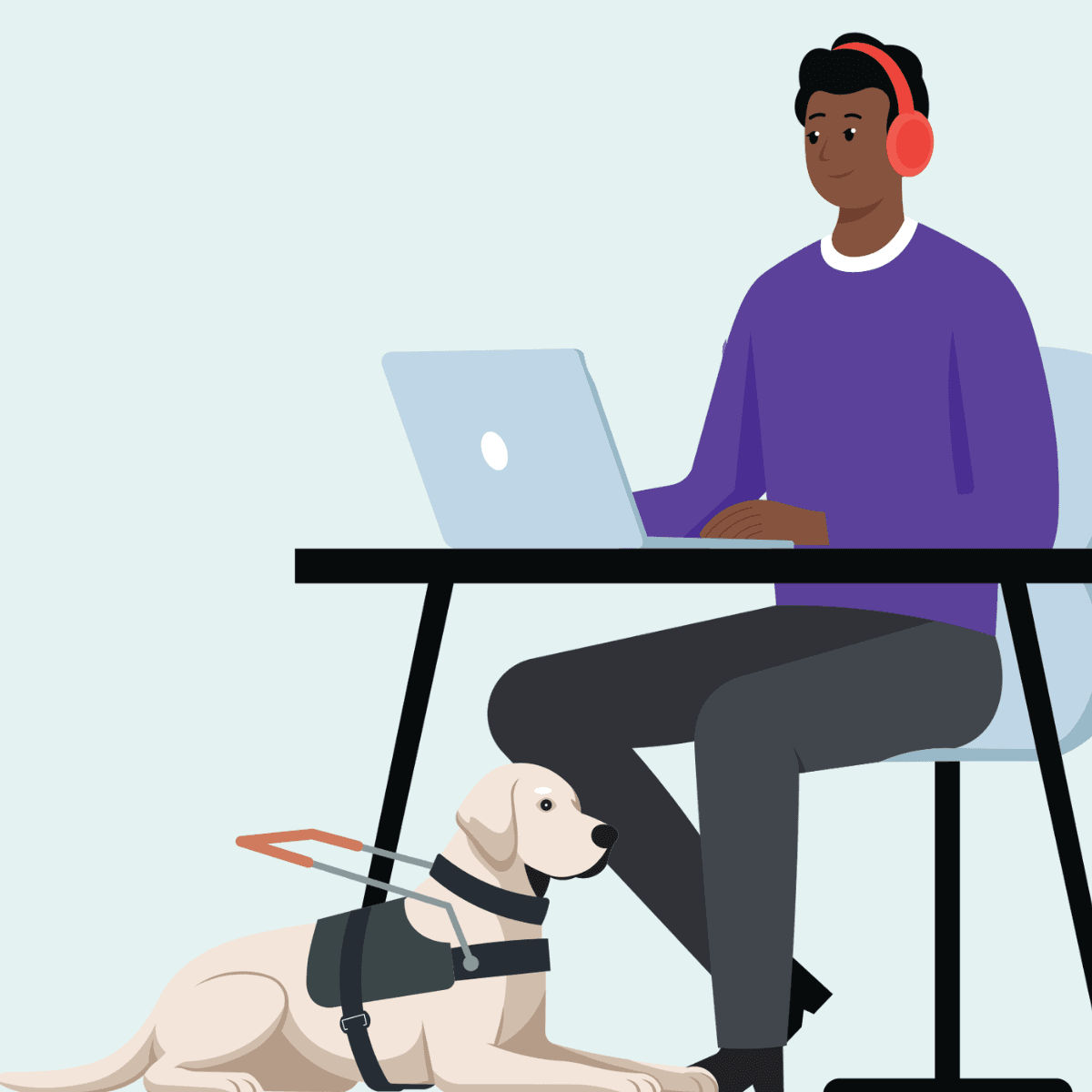
Automated rules check code. Experts check the code and the interface against the criteria. Neither can tell you whether a person who is blind can finish your application, whether an older customer trusts your checkout, or whether someone with limited English understands your fees. Our research shows what that leaves out.
Comprehension is the biggest problem we measure. Across 5,733 approved individual findings from 15 independent usability studies, 29.4% were comprehension friction: people could reach the content but could not understand it. Most of that is invisible to a rules engine.
The worst problems still map to the standard. Of 531 findings rated severe, 440 (83%) related to a WCAG criterion, and 4.1.2 Name, Role, Value alone accounted for 178 of them. Real people confirm which code issues actually lock someone out.
Different groups break in different places. In our analysis of 3,197 cohort-tagged findings, blind participants’ findings were accessibility friction 37.4% of the time, while Deaf participants’ findings were comprehension friction 40.9% of the time. Testing only with screen reader users would miss half the picture.
Some barriers pass every check. A form can label every field correctly and still lose a person’s progress every time they make an error. Only someone using the whole journey finds that.
The same gap is why many teams pair tools with people, as our Level Access comparison also explains. The WebAIM Million 2026 report found detectable WCAG failures on 95.9% of the top one million home pages. Tools like axe are why those failures can be found and fixed at scale. Real people are how you know the fixes worked.
How do Deque’s tools and See Me Please work together?
The most effective teams we see use both, in this order:
Build with automated checks. Run axe or a similar engine in development and in your pipeline so known code issues never ship.
Audit when you need a formal position. An expert audit or conformance report states where you stand against WCAG, for procurement or policy.
Test the journeys that matter with real people. See Me Please shows whether people from six perspectives can complete them, with clips every team can watch.
Re-test after you fix. Run the same journey again to prove the change worked. Our guide to re-testing after accessibility fixes explains how.
When should you choose Deque, and when See Me Please?
Choose Deque when… you want accessibility checks in your code editor and pipeline. Choose See Me Please when… you want to watch 18 real people use the finished journey.
Choose Deque when… you need a formal audit or conformance report. Choose See Me Please when… you need evidence of what to fix first, and why.
Choose Deque when… you need role-based accessibility training. Choose See Me Please when… you want every team to understand diverse customers by seeing them.
Choose Deque when… you need to find code issues across many pages. Choose See Me Please when… you need findings from older people and people with limited English, not only assistive technology users.
Frequently asked questions
Is See Me Please an alternative to Deque?
For lived-experience user testing, yes. For automated testing tools, audits, VPATs and training, no: See Me Please does not sell those. Many teams use axe in development and See Me Please to test key journeys with real people.
If axe catches 57% of issues, why pay for people?
Two reasons. The other issues need a person to find. And of the issues a tool does find, it cannot tell you which ones actually lock someone out. In our research, 83% of severe findings related to a WCAG criterion (WCAG failures), and comprehension, which no rules engine checks, was the most common problem of all (what WCAG tools miss).
Who decides that a finding is a WCAG issue?
Our researchers tag each finding with a finding type from a versioned catalogue. Each type is mapped in advance to the WCAG 2.2 criteria it relates to, marked as a likely failure or as related, and people approve the mappings, so the same barrier is mapped the same way on every project.
Can you test before it is live?
Deque’s tools sit in your pipeline. We test prototypes, beta releases and live services, so you can test the human side at the same stage. Tell us whether your prototype works with a screen reader, and we plan around it.
How is See Me Please priced?
Per project, or as a bundle or programme drawn down over a term, with no seats or licences. Bundles cost materially less per project. See how pricing works.
Does Deque do usability testing with people with disabilities?
Deque’s services page lists audits, conformance reports, remediation, consulting, training and assistive technology acceptance testing. It publishes guidance on testing with disabled users, but we could not find a usability testing service with its own panel on its site as at 24 November 2026.
How much can automated accessibility testing find?
Deque’s 2021 study found that, on average, 57% of accessibility issues were covered by automated testing. The UK Government Digital Service found in 2017 that the best single tool it tested caught 41% of deliberate barriers. Either way, a large share needs people.
Does See Me Please map findings to WCAG?
Yes. Each finding that relates to a WCAG 2.2 success criterion is mapped to it and explained in plain language. See Me Please does not certify conformance.
Next step
Already running axe? Send us the journey your scans say is clean, and we will show you what people still meet.
Test one journey with 18 real people. Book a 30-minute call and we will scope it with you. Not the budget holder? Ask us for a one-page summary to send your manager. Book a call
Sources
Deque, home page, read 24 November 2026: deque.com
Deque, About, read 24 November 2026: deque.com/about
Deque, Accessibility services, read 24 November 2026: deque.com
Deque, Automated testing study identifies 57 percent of digital accessibility issues, 10 March 2021: deque.com
Deque, How to incorporate users with disabilities in UX testing, 18 November 2014: deque.com
WebAIM, The WebAIM Million, 2026 report: webaim.org
UK Government Digital Service, What we found when we tested tools on the world’s least-accessible webpage, 24 February 2017: accessibility.blog.gov.uk
See Me Please research, 15 independent usability studies conducted between late 2025 and mid-2026: comprehension findings, WCAG failures, what breaks for whom. How we count and check these figures: how we publish research.